knowledgecenter-breadcrum

Knowledge Center

01 Jul, 2020

How To Send Email To A Microsoft Teams Channel

Posted on 01 Jul, 2020 by Admin, Posted in Microsoft Teams

How To Send Email To A Microsoft Teams Channel Blogs

How To Send Email To A Microsoft Teams Channel

Introduction

In this blog, we will see how to send an email to any Teams channel of your choosing. For this particular example, I will be using outlook, but you can use whichever email client you like.

Step by Step

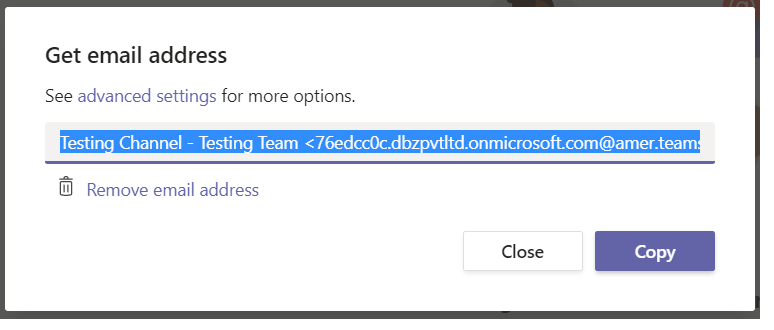
  1. Go to your Teams channel where you want to send the email to, click on the ellipses button and then click on Get email address.
  2. A pop up will appear, just copy the address from there and we will use this address to reference the channel we need to send the email to.
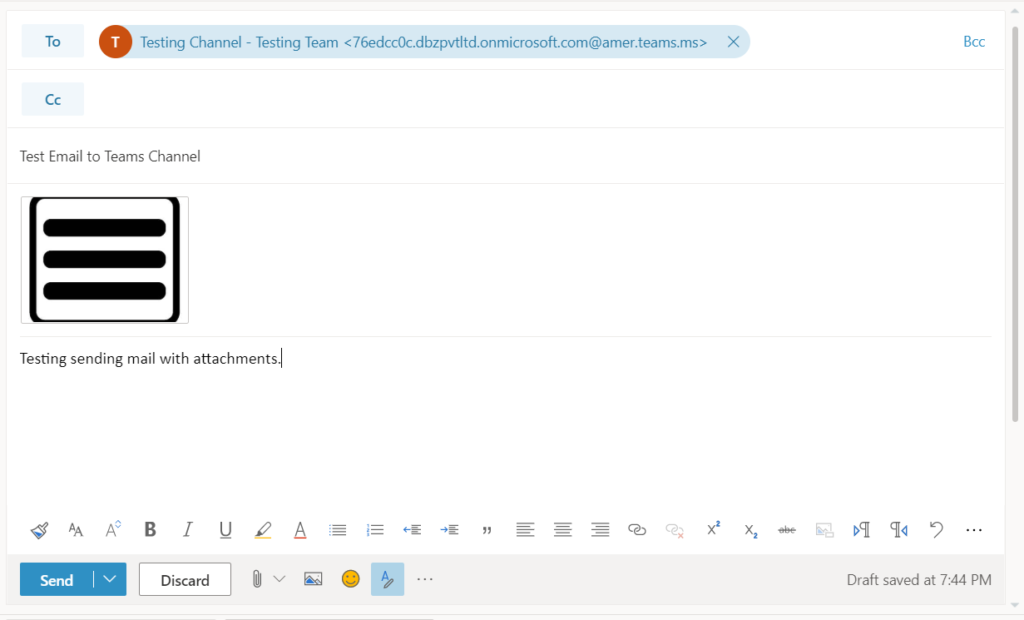
  3. Go to your Outlook/Gmail or whichever email client you are using and compose/forward the mail which you want to send to the channel.
  4. In the To section of the email paste the address which you just copied.
  5. Press Send.
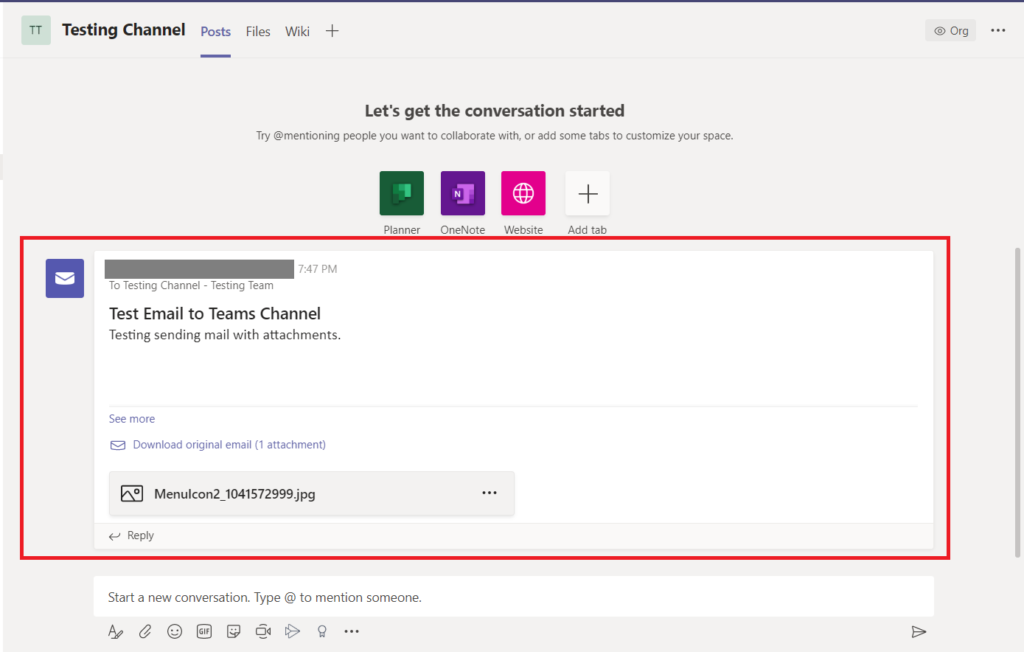
  6. Now go to your Teams Channel, and you can now see the email you just sent.
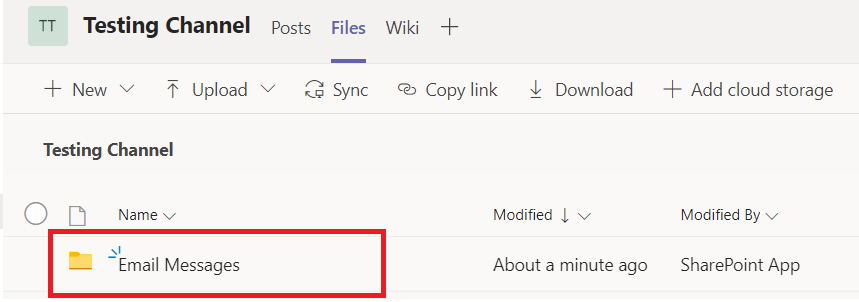
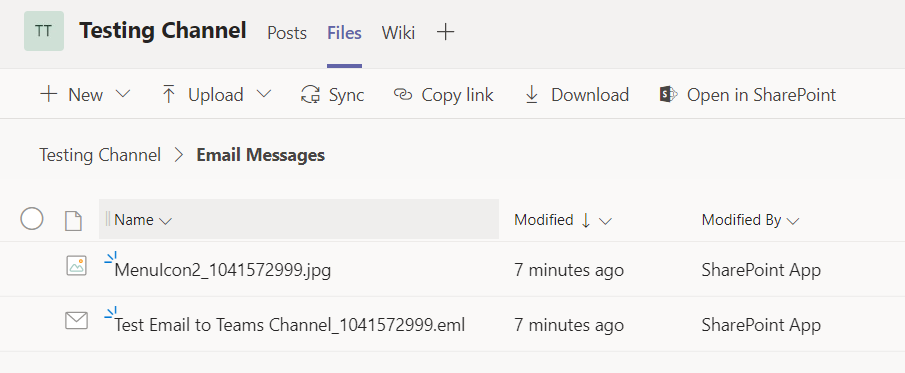
  7. The Teams will automatically create an “Email Messages” folder where you can find your original email and any of the attachments you have sent along with the email. 

Comment

This is a Required Field

Loading

Recent Updates

Blogs
27 Feb, 2026

How to Use Parameters in Power BI to Connect to Microsoft Dataverse

When working with multiple environments in Microsoft Dataverse (DEV, TEST, PROD), hardcoding the environment URL inside Power BI Desktop creates…

READ MORE
Blogs
25 Feb, 2026

Power Apps Production Deployment Checklist: Best Practices for a Smooth Go-Live

Introduction In Power Apps, even a small mistake during deployment can impact users and business processes. This checklist will help…

READ MORE
PCF Ribbon Button Thumbnail
Blogs
16 Feb, 2026

Launching a PCF Control from a Ribbon Button using Custom Pages in Dynamics 365

Introduction: In Model-driven apps, PCF controls are typically embedded inside forms or views. However, unique business requirements often demand more…

READ MORE